When to Refer Wisdom Teeth vs Treat In-House
Clinical Training · Western Surgical and Sedation
Every general dentist has a version of the same moment. The panoramic x-ray comes up, a lower third molar sits at an angle, and the decision gets made in about four seconds: refer it out.
For most dentists, that decision was never actually trained. It was inherited from dental school, where the safe default was always refer, and it was never revisited once the dentist had years of unrelated clinical experience under their belt. The result is a referral reflex that treats every impacted wisdom tooth as equally complex, when in practice the range runs from cases a general dentist can complete in twenty minutes to cases that genuinely belong with an oral surgeon.
This article is not an argument for treating everything in-house. It is a framework for telling the difference, so the referral decision is based on the case in front of you instead of a habit formed a decade ago.
Why the Default Referral Habit Costs More Than It Seems
The average general practice refers out a meaningful share of its surgical production every year, and third molars are consistently one of the two highest-volume categories, alongside IV sedation cases. That production does not disappear. It walks out the door, gets restored somewhere else, and often takes the patient's trust in that specialist relationship with it.
The cost is not just financial. Every referral is also a small erosion of the idea that the general dentist is the one who handles things. Patients notice which procedures their dentist keeps in-house and which ones get sent elsewhere, and over enough referrals, it shapes how much complexity they believe their dentist is capable of handling.
None of this means every case should be treated in-house. It means the referral decision deserves the same rigor as any other treatment planning decision, instead of a reflex.
The Three Questions That Actually Determine the Referral
Complexity in third molar extraction is not one variable. It is the interaction of three, and most referral reflexes only account for the first one.
1. Position and angulation
This is the variable dentists were trained to notice. Mesioangular impactions are generally the most straightforward. Distoangular and horizontal impactions increase difficulty. Depth relative to the occlusal plane and proximity to the second molar root matter as much as the angulation itself.
2. Proximity to the inferior alveolar nerve
This is the variable that drives most referral decisions, and it is also the one most often assessed conservatively without a clear protocol. Radiographic signs of close nerve proximity, such as darkening of the root or interruption of the white line of the canal, warrant real caution. But proximity exists on a spectrum, and a structured approach to reading that spectrum, rather than a binary safe-or-refer read, is what separates confident case selection from reflexive caution.
3. Root morphology and patient factors
Curved, fused, or hypercementosed roots change the extraction approach regardless of position. Patient factors, including anticoagulant use, bone density, and medical history, layer on top of the anatomical picture. A structurally simple case in a medically complex patient is a different decision than the same anatomy in a healthy patient.
The dentists who treat third molars confidently in-house are not the ones who take on harder cases. They are the ones who can read all three variables together and know exactly where their own line is, case by case.
A Working Framework for the Referral Decision
The goal is not to memorize a rulebook. It is to build a repeatable process that produces the same answer every time you see the same case, instead of a decision that shifts with how busy the day is.
Green zone: appropriate for in-house treatment with structured training
Mesioangular or vertical impactions, adequate distance from the inferior alveolar canal on radiographic review, straightforward root morphology, and a medically uncomplicated patient. These cases represent a substantial share of the third molars that get referred out of general practices today, despite fitting comfortably within a trained general dentist's scope.
Yellow zone: appropriate with experience and a clear protocol
Distoangular or horizontal impactions with moderate depth, some proximity to the canal without high-risk radiographic signs, or patients with manageable medical complexity. These are the cases where structured training and mentorship make the difference between confident execution and unnecessary risk.
Red zone: still belongs with a specialist
Full bony impactions with high-risk nerve proximity signs, significantly curved or dilacerated roots, medically complex patients requiring specialized management, or any case where the radiographic picture is genuinely ambiguous after a careful read. Knowing this zone as clearly as the green zone is what makes the framework safe to use.
Why This Is a Training Problem, Not a Confidence Problem
Case selection accuracy improves with structured, repeated exposure to real cases, not with more years in general practice alone. A dentist who has been in practice for fifteen years but has referred every third molar during that time has not built third molar judgment. The judgment comes specifically from seeing enough real cases, guided by someone with the experience to correct a misread before it becomes a complication.
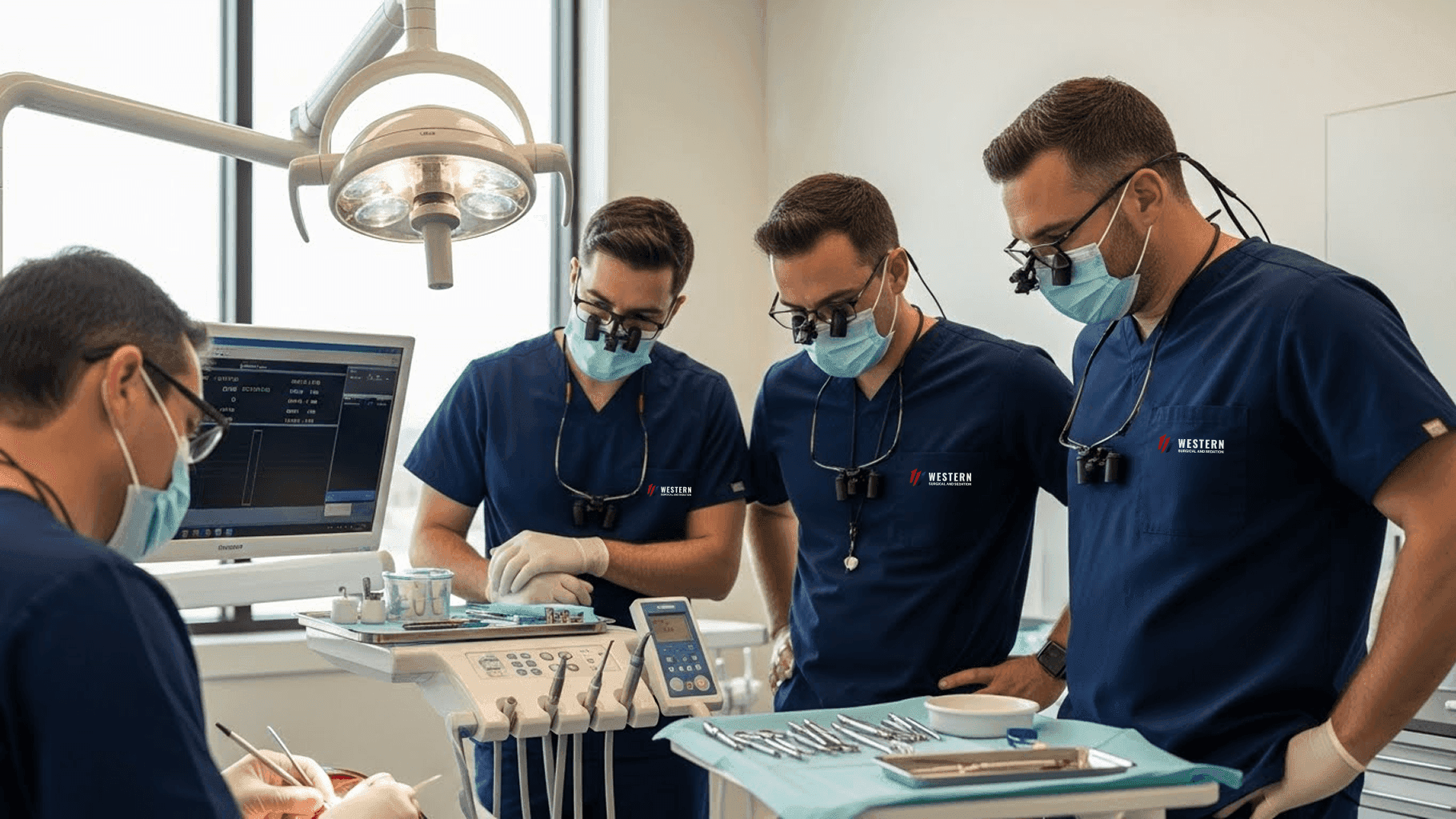
This is the reasoning behind live-patient surgical training over lecture-based or simulation-based courses. Reading about the three variables above is necessary but not sufficient. The skill is built by evaluating real anatomy, making the call, and getting immediate feedback from an experienced surgeon standing next to you, case after case.
The Impact7 Techniques Course at Western Surgical and Sedation is built around exactly this structure: live patient cases, direct chairside guidance from Dr. Heath Hendrickson, and a systematized approach to case selection built from over 300,000 extractions. The goal is not to teach dentists to take on everything. It is to make the green and yellow zones a genuinely confident, repeatable part of a general practice, while keeping the red zone exactly where it belongs.
Frequently Asked Questions
What percentage of wisdom tooth cases can a trained general dentist safely treat in-house?
There is no universal percentage, because it depends entirely on case mix in a given patient population. What is consistent is that a substantial share of the third molars currently referred out of general practices fall into the green or yellow zone described above, meaning the referral was driven by lack of training rather than genuine case complexity.
How long does it take to become confident with in-house third molar extraction?
Confidence builds through structured exposure to live cases rather than time alone. Dentists who complete a hands-on training program with direct mentorship typically report implementing straightforward cases within weeks of completing training, with case complexity expanding gradually as judgment develops.
Does adding third molar extraction in-house require additional certification beyond a general dentistry license?
Routine third molar extraction under local anesthetic generally falls within the scope of a general dentistry license, though specific requirements vary by state. Cases involving IV sedation require a separate state sedation permit, which is a distinct training and certification path.
What is the biggest mistake general dentists make when starting to treat third molars in-house?
Treating case selection as a confidence question instead of a clinical judgment question. The dentists who run into trouble are not the ones who lack confidence. They are the ones who have confidence without a structured framework for reading the three variables that actually determine complexity.
The fastest way to build real case selection judgment is with real cases, next to someone who has done it 300,000 times.
Western Surgical and Sedation trains general dentists to bring surgical cases in-house, with live patients, real results, and a curriculum built for immediate implementation.
Explore our programs at westernsurgicalandsedation.us/courses
when to refer wisdom teeth vs treat in-house
wisdom teeth removal training, impacted wisdom teeth training, case selection wisdom teeth, third molar referral decision

Related Articles
Related reading
Explore articles connected to surgical training, IV moderate sedation, and real world clinical decision making, selected to support dentists applying advanced care in daily practice.